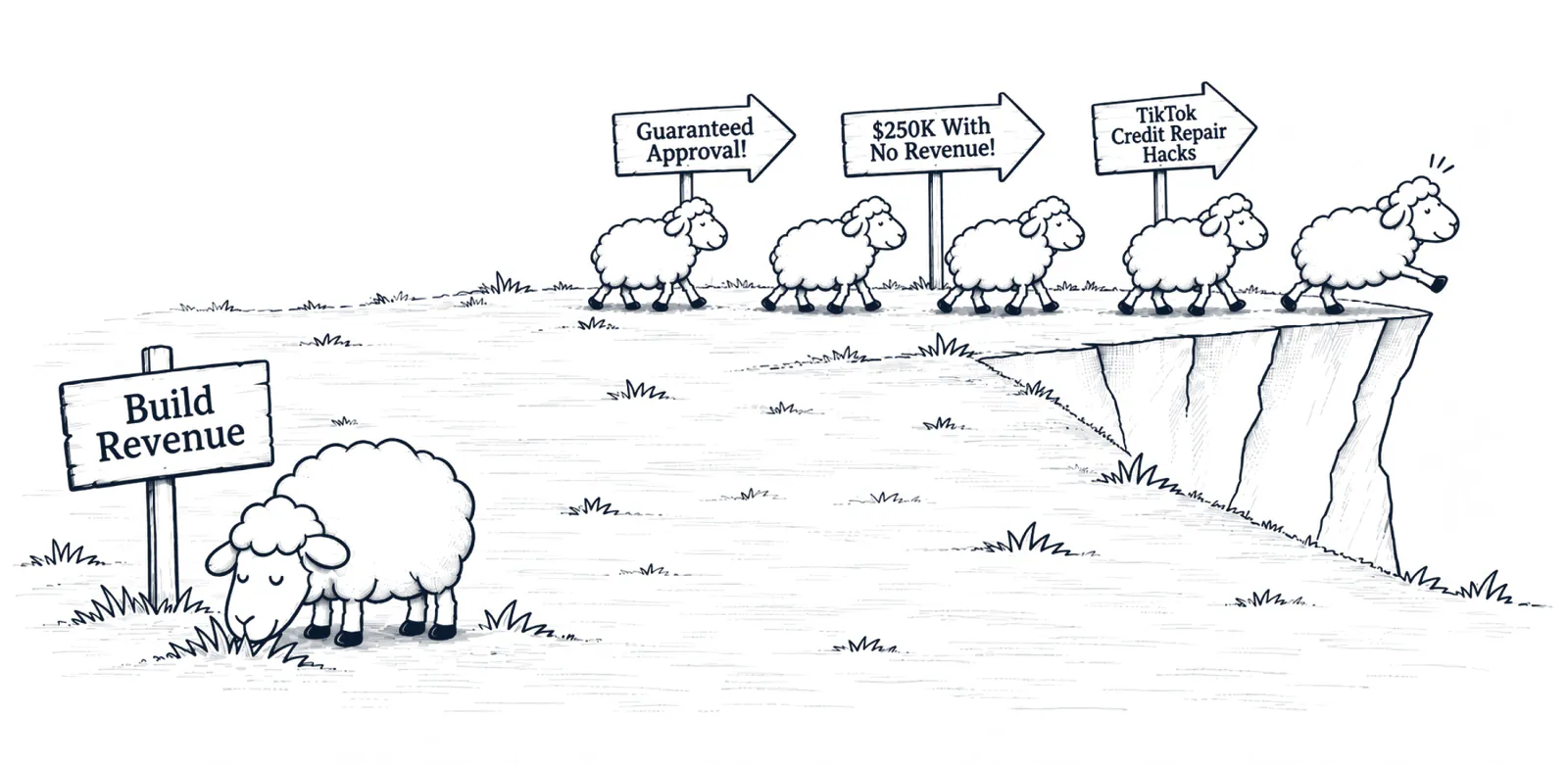
Why do merchants feel the need to fill out a prequalification scan or funding application inaccurately?
I’m genuinely asking.
Why pump up the revenue when, in reality, once we receive the bank statements, the actual revenue is a fraction of what was reported?
We’re never going to take your word for it.
Not because we don’t believe you. Because the lenders don’t have to believe you either.
What Lenders Actually Do With Your Bank Statements
The lenders we work with are going to perform a forensic analysis of your bank statements. They’re looking at where the money is coming from, where it’s going, how consistent the deposits are, and whether the business actually generates the revenue you claimed on the application.
- They’re pulling out transfers from other accounts and not counting them as revenue.
- They’re identifying Zelle transfers from the owner into the business account and not counting those as revenue.
- Cash App? Same thing.
Money moving around between accounts doesn’t magically become business revenue because it landed in the business bank account.
Projections vs. Reality
And here’s another big one:
Revenue projections versus actual revenue.
If you tell me you’re doing $25,000 a month and your bank statements show something completely different, you’ve created a problem that didn’t need to exist.
Keep Your Accounts Separate
The same thing goes for commingling.
Keep your business account business. Keep your personal account personal.
If you have to transfer money from one account to the other because you own the business, that’s understandable.
But the business doesn’t own you.
And Don’t Do This Either
And then there’s another one I see that drives me crazy:
Kalshi.
When a lender sees Kalshi activity in a business bank statement, they’re going to question what they’re looking at. Whether you’re trading contracts, betting on outcomes, or treating your business bank account like a personal trading account, don’t do it in your business bank account.
Every action you take as a business owner has a consequence.
And when you’re talking about funding, the consequence can be very simple:
You don’t qualify when you actually need the money.
And that’s the wrong time to start looking for capital anyway.
Look for Money Before You Need It
Look for money when you don’t need it.
Plan 90 to 180 days ahead.
I know that’s a hell of a lot easier to say than it is to actually do. Business throws everything at you, every single day. I own a business. I understand it.
But you still have to do the best you can.
- Make reasonable projections.
- Manage your cash flow.
- Keep your banking clean.
- Separate your personal and business finances.
And understand that when you apply for a loan, an advance, a line of credit, or a business credit card, your revenue is going to be scrutinized.
So lying on the application doesn’t make any sense.
You’re going to produce documentation that proves the application wasn’t accurate in the first place.
And now you’ve wasted your time, my time, and the lender’s time.
Tell Me the Truth
I see merchants every single day saying they’re doing $25,000 a month.
I don’t care.
You’re not impressing me by telling me a bigger number.
Tell me the truth. Because we’re going to find out.
The Other Broker Question
And here’s another one:
“Are you working with any other brokers?”
Tell the truth.
If another broker has submitted your deal to one of our lenders within the past 30 days, we can often find out.
At Fugio Funding Network, our engagement agreement includes a 60-day exclusivity provision. When I ask you whether you’re working with another broker, I’m not asking because I’m trying to catch you.
I’m asking because I need to know what I’m dealing with.
Same thing when I ask:
“Do you have any other loans or merchant cash advances?”
The answer is almost always:
“No.”
And then we open the bank statements and see three or four positions.
Come on.
Please tell the truth.
We’re going to find out either way.
Final Thoughts
Let’s save everybody the aggravation and get the truth on the front end.
And I’ll make you a deal:
We’ll do a better job asking better questions if you’ll do a better job giving us honest answers.
That’s how we get deals funded.